Scroll to:
Scroll to:

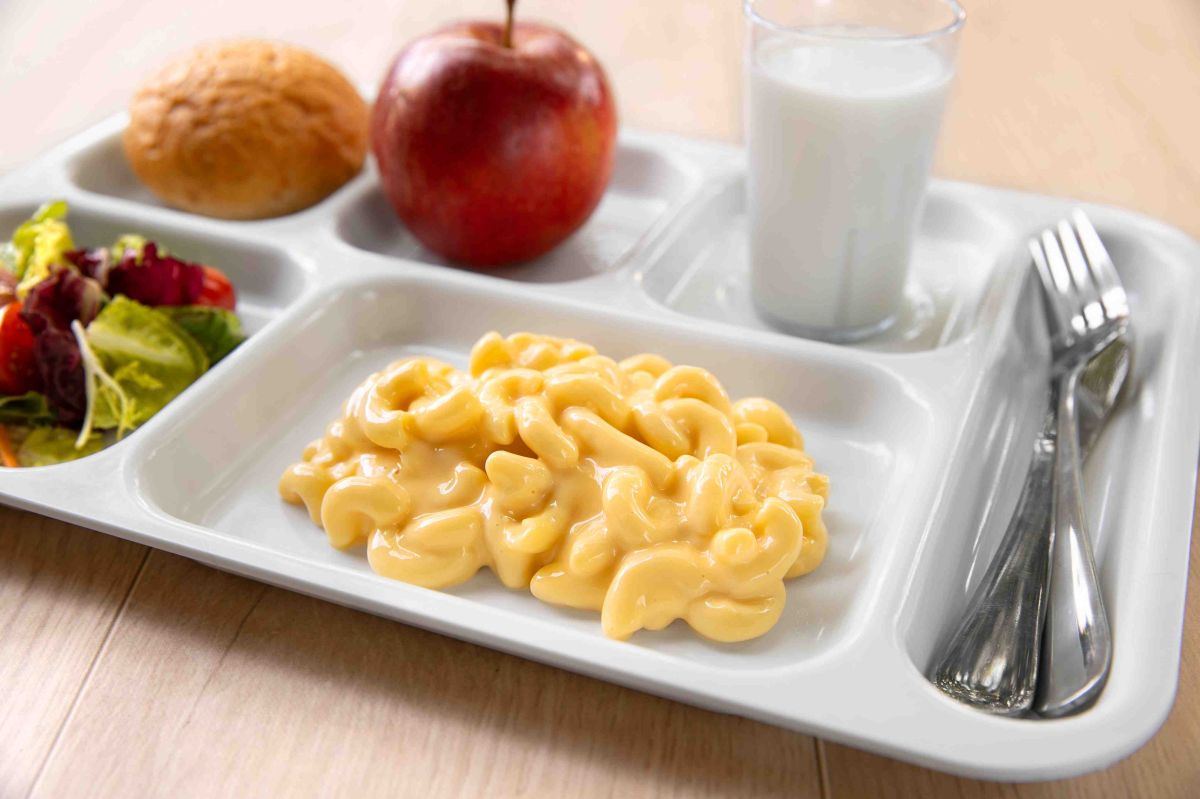
Macaroni and Cheese (K-8)

RECIPE DETAILS

Item ID: 1973137

Serving Size: ¾ Cup

HACCP Process Category:
#2 - Same Day Service

Food Category: Lunch Entree

Attributes: Vegetarian, Pasta, Noodles, K-8

Allergens: Milk, Wheat

RECIPE DETAILS

Item ID: 1973137

Serving Size: ¾ Cup

HACCP Process Category:
#2 - Same Day Service

Food Category: Lunch Entree

Attributes: Vegetarian, Pasta, Noodles, K-8

Allergens: Milk, Wheat

Ingredients

To scale a recipe, change the “Standard Yield” number, then click the “Scale” button. To return to the default standard batch size, click the “Reset” button. We recommend scaling batch sizes to be compatible with your equipment and operational model. Since seasonings are particularly affected by increased scaling, we recommend taste-testing as you increase quantities.

Ingredients list for this recipe is unavailable.

Ingredients used in the recipes are commonly found USDA Foods or commercially available products. All ingredients for each recipe are listed in “As purchased” quantities. Ingredient yields from USDA’s Food Buying Guide can be found at the top of the Recipe Instructions when applicable.


Instructions

Pre-Preparation

  1. Make the cheese sauce:
    1. In a pot or steam kettle set on medium heat, melt butter and then whisk in flour. Whisk continuously until a blonde roux is formed.
    2. Gradually whisk in milk until smooth and well combined. Bring to a simmer and continue to cook until the mixture thickens and coats the back of a spoon.
    3. Once a thick béchamel sauce is achieved, whisk in cheese and salt using an immersion blender or a whisk until fully melted and smooth.
  2. If preparing and serving the same day, preheat oven to 350°F.

Preparation

  1. In alarge pot, steam kettle, or tilt skillet set on high heat, bring the water to a rolling boil.
  2. Add salt (second amount) to the water (ratio of 1/8 cup salt per 1 gallon water).
  3. Add pasta and stir to prevent clumping.
  4. Cook pasta for 2 to 3 minutes.
  5. Drain and toss with a little oil to prevent sticking.
  6. Portion 4 lbs pasta into each 2-inch hotel pan.
  7. Mix in 1 gallon cheese sauce into each hotel pan to coat the pasta.
  8. Cover each pan with parchment, then foil.
  9. If preparing and serving the same day, bake at 350°F for about 15 minutes until the internal temperature reaches 165°F.
    Note: Alternative option to steam the hotel pans.
  10. Uncover and evenly sprinkle 8 oz shredded cheddar cheese (second amount) on top of each hotel pan.
  11. Return to the oven (or steamer) and heat for about an additional 15 minutes to melt the cheese topping.
  12. Hold hot until service at or above 135°F.

Make-ahead or shipping: Cool per HACCP after step 5, then cover and store refrigerated. On the day of service, complete steps 6 through 12.

Serving

Serving size: 3/4 cup (5.7 oz)

Servings per hotel pan: 30

Recipe Source

Boulder Valley School District Food Services

We recommend that any recipe selected for use in your district be tested in your kitchens before adding it to your menu. Recipe testing ensures that the methods and yields are compatible when prepared with your equipment. Since seasonings are particularly affected by scaling recipes, we highly recommend taste testing as you adjust quantities.


Food Groups/Meal Patterns

Based on default serving size and measure.

Meal Pattern Amount Per Serving
Fruits 0 cups
Vegetables, Dark Green 0 cups
Vegetables, Red/Orange 0 cups
Vegetables, Beans, Peas, & Lentils 0 cups
Vegetables, Starchy 0 cups
Vegetables, Other 0 cups
Vegetables, Additional 0 cups
Grains 1.5 oz eq
Meat/Meat Alternatives 1.5 oz eq
Fluid Milk 0 cups

Nutrition Facts

Based on default serving size and measure.

Nutrients Serving
Calories 400.44 kcal
Total Fat 22.71 gm
Saturated Fat 14.23 gm
Trans Fat 0.00* gm
Sodium 660.39 mg
Carbohydrates 31.08 gm
Fiber 4.01 gm
Sugars 0.54* gm
Added Sugars 0.00* gm

*May vary depending on individual product(s) used in recipe.

Discover More

Menu Development

When we change from ready-to-heat foods to fresh foods in the context of menu planning, letting go of prior presumptions is important. Determining the amount of choices and how many per each age group are examples of menu planning challenges. Efficient, fiscally sustainable scratch-cooking programs are reducing choices in favor of fresh flavors.

Management

Management is a general term for all of the areas we include here: fiscal, human resources, facilities, assessment, and wellness policies. In order for a district’s food service department to be successful, the director has to be adept in a vast array of subjects.

Procurement

Procurement is one of the most complex processes that happen within our food service departments. In the event of shifting a program from using processed, ready-to-heat foods to scratch cooked recipes, many processes change.

Help The Lunch Box!

Please help us keep our tools & resources free for all users by registering here!

Thank you for signing up!

There was an error, please try again.