RECIPE DETAILS
Item ID: 1981167
Serving Size: 1 Tbsp (0.5 oz)
HACCP Process Category:
#3 - Complex Food Preparation
Food Category: Condiments
Attributes: Sauces, Vegetarian
Allergens: Soy, Wheat
RECIPE DETAILS
Item ID: 1981167
Serving Size: 1 Tbsp (0.5 oz)
HACCP Process Category:
#3 - Complex Food Preparation
Food Category: Condiments
Attributes: Sauces, Vegetarian
Allergens: Soy, Wheat
Ingredients
To scale a recipe, change the “Standard Yield” number, then click the “Scale” button. We recommend scaling based on multiples of servings per pan. Click the “Reset” button to return to the default standard batch size.
Ingredients list for this recipe is unavailable.
Ingredients used in the recipes are commonly found USDA Foods or commercially available products. All ingredients for each recipe are listed in “As purchased” quantities. Ingredient yields from USDA’s Food Buying Guide can be found at the top of the Recipe Instructions when applicable.
Instructions
Yields
- Ginger: 75%
Pre-Preparation
- Wash, peel, then mince garlic and ginger.
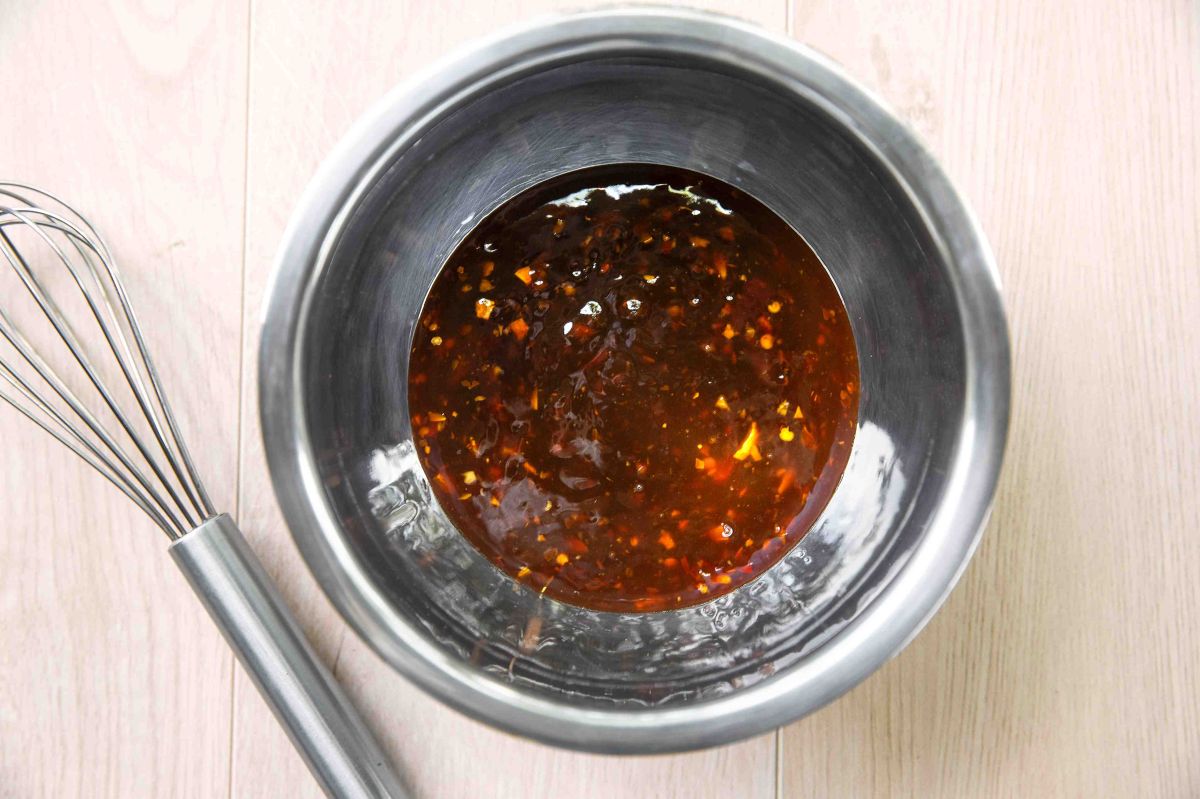
- In a bowl, whisk to combine soy sauce, lime juice, vinegar, and honey.
Preparation
- In a saucepan set on medium heat, cook the garlic, ginger, Szechuan paste, oil, and crushed red pepper for about 1-3 minutes or until fragrant.
- Whisk in the soy sauce mixture and bring to a simmer.
- In a separate bowl, whisk cornstarch with water to make a slurry.
- Whisk the slurry into the sauce and cook until thickened (it should coat the back of a spoon).
- Cool sauce and hold cold until service at or below 41°F.
Serving
Serving size: 1 Tbsp (0.5oz)
Suggested serving utensil: ladle
*Note on Allergens: using a gluten-free soy sauce can turn this recipe into a gluten-free option
Recipe Source
Boulder Valley School District Food Services We recommend that any recipe selected for use in your district be tested in your kitchens before adding it to your menu. Recipe testing ensures that the methods and yields are compatible when prepared with your equipment. Since seasonings are particularly affected by scaling recipes, we highly recommend taste testing as you adjust quantities.
Food Groups/Meal Patterns
Based on default serving size and measure.
| Meal Pattern | Amount Per Serving |
|---|---|
| Fruits | 0 cups |
| Vegetables, Dark Green | 0 cups |
| Vegetables, Red/Orange | 0 cups |
| Vegetables, Beans, Peas, & Lentils | 0 cups |
| Vegetables, Starchy | 0 cups |
| Vegetables, Other | 0 cups |
| Vegetables, Additional | 0 cups |
| Grains | 0 oz eq |
| Meat/Meat Alternatives | 0 oz eq |
| Fluid Milk | 0 cups |
Nutrition Facts
Based on default serving size and measure.
| Nutrients | Serving |
|---|---|
| Calories | 6.32 kcal |
| Total Fat | 0.10* gm |
| Saturated Fat | 0.01* gm |
| Trans Fat | 0.00* gm |
| Sodium | 26.52 mg |
| Carbohydrates | 1.21* gm |
| Fiber | 0.01* gm |
| Sugars | 0.58* gm |
| Added Sugars | 0.56* gm |
Discover More
Menu Development
When we change from ready-to-heat foods to fresh foods in the context of menu planning, letting go of prior presumptions is important. Determining the amount of choices and how many per each age group are examples of menu planning challenges. Efficient, fiscally sustainable scratch-cooking programs are reducing choices in favor of fresh flavors.