RECIPE DETAILS
Item ID: 2030131
Serving Size: 2 ½ Cup
HACCP Process Category:
#2 - Same Day Service
Food Category: Lunch Entree
Attributes: Pasta, Noodles, Tofu, Vegan, Vegetarian
Allergens: Soy, Wheat, Sesame
RECIPE DETAILS
Item ID: 2030131
Serving Size: 2 ½ Cup
HACCP Process Category:
#2 - Same Day Service
Food Category: Lunch Entree
Attributes: Pasta, Noodles, Tofu, Vegan, Vegetarian
Allergens: Soy, Wheat, Sesame
Ingredients
To scale a recipe, change the “Standard Yield” number, then click the “Scale” button. We recommend scaling based on multiples of servings per pan. Click the “Reset” button to return to the default standard batch size.
Ingredients list for this recipe is unavailable.
Ingredients used in the recipes are commonly found USDA Foods or commercially available products. All ingredients for each recipe are listed in “As purchased” quantities. Ingredient yields from USDA’s Food Buying Guide can be found at the top of the Recipe Instructions when applicable.
Instructions
Yields
- Onion: 78%
- Green Cabbage: 87%
- Carrots: 83%
Pre-Preparation
-
Prepare soy-marinated tofu:
- Preheat oven to 375°F.
- Line sheet pans with parchment paper.
- Dice the tofu, then combine with soy sauce, oil, and sesame oil (first amount). Mix until all pieces are coated.
- Transfer diced tofu to the prepared sheet pans.
- Bake at 375°F for about 15 minutes, or until caramelized and the internal temperature reaches 145°F.
- Hold hot until service at or above 135°F.
- Cook pasta until al dente:
- Fill a tilt skillet, steam kettle, or large pot with water. Note: Follow the ratio of 1 pound of pasta per 1 gallon of water. To avoid clumping, cook the pasta in batches if needed.
- Bring water to a rolling boil. For each gallon of water, add 1/8 cup salt.
- Add pasta and stir to avoid clumping.
- Cook pasta for about 6-8 minutes or until al dente (time will vary based on factors such as altitude).
- Scoop pasta out with a large strainer and place it in a colander to drain.
- Add just enough oil to coat the pasta and toss it in the colander.
- Place 5 pounds of cooked spaghetti in each hotel pan.
- Hold hot at or above 135°F for immediate use.
- Prepare the vegetables:
- Wash produce as needed.
- Cut off ends and remove skin from onions, then slice into 1/4-inch strips.
- Quarter each green cabbage head, then slice away the cores and shred the cabbage.
- Cut the top end off the carrots, then shred.
- Reduce oven temperature to 350°F.
Preparation
- Combine all shredded vegetables together and portion 4 ½ cups into each hotel pan.
- In a liquid measuring container, whisk together teriyaki sauce, sesame oil (second amount), and sriracha.
- Mix in 2 cups of teriyaki sauce mixture in each hotel pan with vegetables.
- Cover each hotel pan with parchment and foil.
- Bake in 350°F oven for 30–40 minutes or until it reaches a minimum internal temperature of 165°F.
- Remove from the oven and combine each hotel pan of vegetables with each pan of noodles.
- Cover and hold hot until service at or above 135°F.
Serving
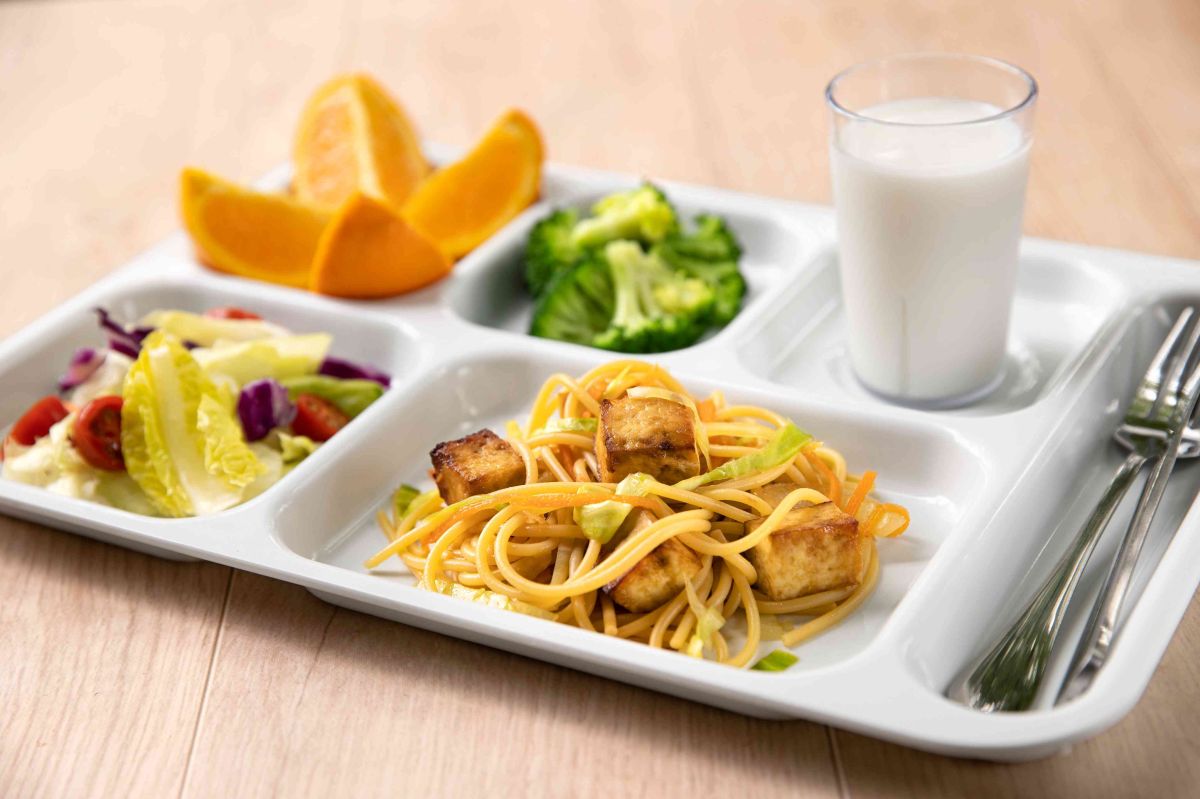
Serving Size: 1 ½ cups lo mein and vegetables topped with 1 cup of the seasoned tofu
Suggested Serving Utensil: Spoodle
Recipe Source
CIA Healthy Kids Collaborative
We recommend that any recipe selected for use in your district be tested in your kitchens before adding it to your menu. Recipe testing ensures that the methods and yields are compatible when prepared with your equipment. Since seasonings are particularly affected by scaling recipes, we highly recommend taste testing as you adjust quantities.
Food Groups/Meal Patterns
Based on default serving size and measure.
| Meal Pattern | Amount Per Serving |
|---|---|
| Fruits | 0 cups |
| Vegetables, Dark Green | 0 cups |
| Vegetables, Red/Orange | 0 cups |
| Vegetables, Beans, Peas, & Lentils | 0 cups |
| Vegetables, Starchy | 0 cups |
| Vegetables, Other | ¼ cups |
| Vegetables, Additional | ⅛ cups |
| Grains | 2 oz eq |
| Meat/Meat Alternatives | 3 oz eq |
| Fluid Milk | 0 cups |
Nutrition Facts
Based on default serving size and measure.
| Nutrients | Serving |
|---|---|
| Calories | 514.50 kcal |
| Total Fat | 31.84 gm |
| Saturated Fat | 2.27* gm |
| Trans Fat | 0.00* gm |
| Sodium | 1,197.12 mg |
| Carbohydrates | 39.53 gm |
| Fiber | 3.23* gm |
| Sugars | 14.30* gm |
| Added Sugars | 0.48* gm |
Discover More
Menu Development
When we change from ready-to-heat foods to fresh foods in the context of menu planning, letting go of prior presumptions is important. Determining the amount of choices and how many per each age group are examples of menu planning challenges. Efficient, fiscally sustainable scratch-cooking programs are reducing choices in favor of fresh flavors.