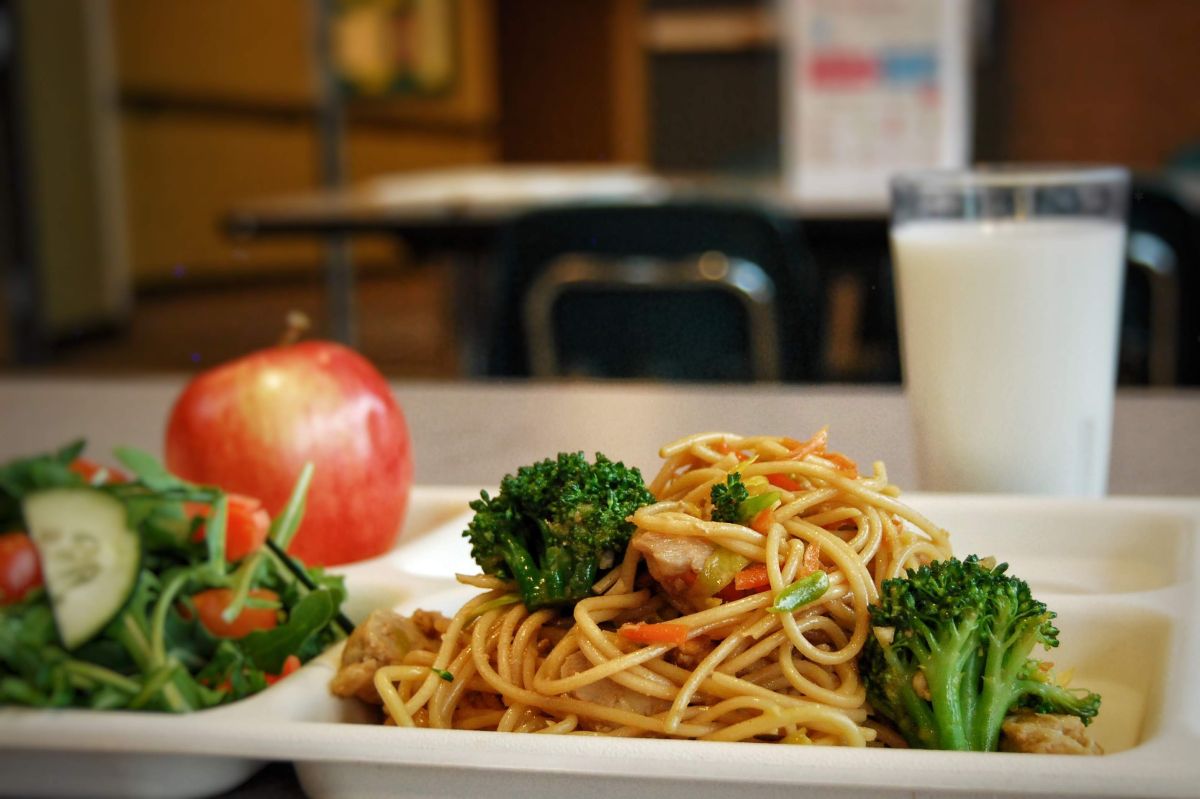
RECIPE DETAILS
Item ID: 2030138
Serving Size: 1 Cup (5.8 oz.)
HACCP Process Category:
#3 - Complex Food Preparation
Food Category: Lunch Entree
Attributes: Vegetarian, Pasta, Noodles
Allergens: Eggs, Soy, Wheat, Sesame
RECIPE DETAILS
Item ID: 2030138
Serving Size: 1 Cup (5.8 oz.)
HACCP Process Category:
#3 - Complex Food Preparation
Food Category: Lunch Entree
Attributes: Vegetarian, Pasta, Noodles
Allergens: Eggs, Soy, Wheat, Sesame
Ingredients
To scale a recipe, change the “Standard Yield” number, then click the “Scale” button. We recommend scaling based on multiples of servings per pan. Click the “Reset” button to return to the default standard batch size.
Ingredients list for this recipe is unavailable.
Ingredients used in the recipes are commonly found USDA Foods or commercially available products. All ingredients for each recipe are listed in “As purchased” quantities. Ingredient yields from USDA’s Food Buying Guide can be found at the top of the Recipe Instructions when applicable.
Instructions
Yields
- Carrots: 79%
- Cabbage: 87%
- Broccoli: 81%
Pre-Preparation
- Wash all vegetables.
- Shred carrots and cabbage.
- Chop broccoli into small florets.
- Mince garlic and ginger.
-
Prepare the sauce:
- In a stockpot, add oil and heat on medium-high. Add garlic and ginger; sauté until soft and fragrant, about 3–4 minutes.
- Add soy sauce and sriracha. Bring to a boil, reduce the heat, and simmer 10 minutes.
- Properly cool the sauce to 70°F within 2 hours and to 41°F or below within 4 hours.
Preparation
For the vegetables and eggs:
- Steam vegetables until just barely cooked (still slightly crunchy), about 8–10 minutes.
- In a separate pan, scramble eggs until 145°F is reached; set aside.
For the noodles:
- Steam or boil pasta in salted water until al dente, about 2 minutes.
- Drain (do not rinse) and divide into hotel pans (9.75 lb per pan).
- Toss each pan of noodles with 1 Tbsp sesame oil to prevent sticking.
For the vegetable lo mein:
- Preheat oven to 325°F.
- In each hotel pan, combine 1.5 cups of sauce, 2 lbs of vegetables, and 3 lbs of scrambled eggs with the cooked pasta (25 servings per pan).
- Reheat for 15–20 minutes until an internal temperature of 165°F is reached.
Additional instructions:
- Vegetable substitutions may include onions, snap peas, sliced mushrooms, chopped bell peppers, bean sprouts, bamboo shoots, and celery.
- Vegetables can be cooked in a steamer, blanched on the stove top, or stir-fried in a tilt skillet with vegetable oil.
Serving
Recipe Source: Live Well We recommend that any recipe selected for use in your district be tested in your kitchens before adding it to your menu. Recipe testing ensures that the methods and yields are compatible when prepared with your equipment. Since seasonings are particularly affected by scaling recipes, we highly recommend taste testing as you adjust quantities.
Food Groups/Meal Patterns
Based on default serving size and measure.
| Meal Pattern | Amount Per Serving |
|---|---|
| Fruits | 0 cups |
| Vegetables, Dark Green | ⅛ cups |
| Vegetables, Red/Orange | 0 cups |
| Vegetables, Beans, Peas, & Lentils | 0 cups |
| Vegetables, Starchy | 0 cups |
| Vegetables, Other | 0 cups |
| Vegetables, Additional | ¼ cups |
| Grains | 2 oz eq |
| Meat/Meat Alternatives | 2 oz eq |
| Fluid Milk | 0 cups |
Nutrition Facts
Based on default serving size and measure.
| Nutrients | Serving |
|---|---|
| Calories | 211.07 kcal |
| Total Fat | 9.88 gm |
| Saturated Fat | 2.46* gm |
| Trans Fat | 0.00* gm |
| Sodium | 685.65 mg |
| Carbohydrates | 21.75 gm |
| Fiber | 2.50* gm |
| Sugars | 2.16* gm |
| Added Sugars | 0.19* gm |
Discover More
Menu Development
When we change from ready-to-heat foods to fresh foods in the context of menu planning, letting go of prior presumptions is important. Determining the amount of choices and how many per each age group are examples of menu planning challenges. Efficient, fiscally sustainable scratch-cooking programs are reducing choices in favor of fresh flavors.